SWPanel

Alerts

The latest published by the SOC

From the most recent to the oldest. Filter by severity, type or topic, or search for a CVE.

Severity
Type
31 alerts
Info

Rising attacks: how to protect your website in a more vulnerable world

In the world of digital security, every week can bring changes. This week, we've seen a 42% increase in new or updated exploits, which means there are more ways to attack websites and servers. Also, there are over 70 vulnerabilities already being used in real attacks. This doesn't mean your website is in danger right now, but it's a good time to review what security measures you have in place.

Attack vectors 13 Nov 2026

Info

More attacks blocked in SWPanel: what it means and how to protect yourself

This week we've seen a 45% increase in the number of attacker IPs blocked, and a 27% increase in distinct IPs. Although total blocks are 8% less than the average of the last five weeks, the increase in certain types of attacks is concerning. If you're selling online, managing corporate email, or maintaining a website, it's important that you understand what's happening and how to protect yourself.

Perimeter attacks 12 Nov 2026

High

Security updates for Node.js on November 11, 2026

Node.js has published six security updates with fixes for critical vulnerabilities. These updates affect versions prior to 22.23.5, 24.22.3, 26.13.1, and 27.0.0. If you use Node.js on your server, it's important to update to one of these corrected versions or higher.

Node.js 11 Nov 2026 6 CVE

Info

Bots on your website: who are they and how to protect yourself?

This week, bot traffic on websites with BotLock has decreased by 32.6% compared to the previous week, which is a relief. However, the overall trend of the last few weeks points to an increase in artificial intelligence bot traffic. Although most of this traffic is not dangerous, some bots may attempt to copy content, scan sensitive routes, or even try to access your website without authorization. It's important to stay alert and take preventive measures.

BotLock 11 Nov 2026

Info

Vulnerabilities in WordPress: what you need to know this week

This week, 166 new critical vulnerabilities have been identified in WordPress plugins and themes. Although the number is high, it is 8.8% less than last week and remains below the average of the last 5 weeks. If you have a website with WordPress, it's important to know that these flaws could allow attackers to take control of your site, steal data, or even execute commands as if they were you. Don't worry: with a bit of attention, you can easily protect yourself.

WordPress 10 Nov 2026

Info

Vulnerabilities in the world: what you need to know and what to do?

Every week, in the world of security, new vulnerabilities are discovered in software, plugins, and servers. This week, 55 new vulnerabilities have been reported that could affect websites, servers, or even printers. Although none of them are currently being used in ransomware attacks, several have a high probability of being exploited. It's like leaving the door to your house unlocked: even if there's no thief right now, it's only a matter of time before someone tries.

Exploited CVEs 9 Nov 2026

Info

Update your website on time: a guide to protect your business

Did you know that hundreds of security flaws in WordPress plugins and themes are published every week? Some allow an attacker to enter without needing a password, others even give them full control of your website. Updating is not just a recommendation: it's a necessity to protect your business. In this article, we explain why, how, and when to do it, with clear steps and tools to help you avoid mistakes.

Practical guides 8 Nov 2026

Info

Less traffic and greater stability in backups

This week, the traffic of websites hosted on SWPanel has decreased by 12.7% compared to the previous week, and the data transferred has also dropped by 13.3%. Although this may seem concerning, it's important to understand what this means and how it affects your website. At the same time, backups have improved slightly, with a +0.9% daily stability. In this bulletin, we explain what's happening, why it's happening, and what you can do to protect your website.

Platform pulse 7 Nov 2026

Info

Rising attacks: how to protect your website in a more vulnerable world

Imagine your website is a building with doors, windows, and locks. This week, attackers have published 26 new ways to force those locks, and some are already being used by real criminals. It's no joke: if your website has an unpatched door, someone could get in, steal data, or even bring down your business.

Attack vectors 6 Nov 2026

Info

Server attacks drop 44% this week, but we're not lowering our guard

Server attacks have dropped by 44% this week, which is good news. But it doesn't mean the dangers have disappeared. Every day, thousands of bots try to access WordPress, email accounts, databases, and servers using brute force. SWPanel's automatic firewall blocks them, but if you're not prepared, even one can cause serious problems.

Perimeter attacks 5 Nov 2026

Info

Bots remain active: how to protect your website in an increasingly automated world

This week (October 28 to November 2), AI bots have continued to be the most active group on websites with BotLock enabled. Although their traffic has decreased by 8.8% compared to the previous week, it remains above the average of the last five weeks. This means that, although the attack rate has slightly moderated, bots are still trying to access content, crawl pages, and copy information to train AI models or for other automated purposes.

BotLock 4 Nov 2026

Info

Critical WordPress vulnerabilities are on the rise: what it means for your website

Last week, the number of critical vulnerabilities in WordPress increased by 102.2% compared to the previous one. This doesn't mean your website is in danger, but it's a good time to review which plugins and themes you have installed and whether they're up to date. Even though not all websites use the affected products, attackers don't know that and search everywhere. That's why it's important to be prepared.

WordPress 3 Nov 2026

Info

Vulnerabilities in the world: how to protect your website?

Every week, thousands of new vulnerabilities are discovered and recorded in global catalogs like CISA KEV, Wordfence, or EPSS. This week, 78 new vulnerabilities have been added to the records. Although not all are immediately dangerous, some allow an attacker to take control of your website, steal data, or even bring down your online store. The number of vulnerabilities used in ransomware campaigns remains zero, which is a relief, but we shouldn't let our guard down.

Exploited CVEs 2 Nov 2026
Info

Server attacks have decreased, but monitoring remains key

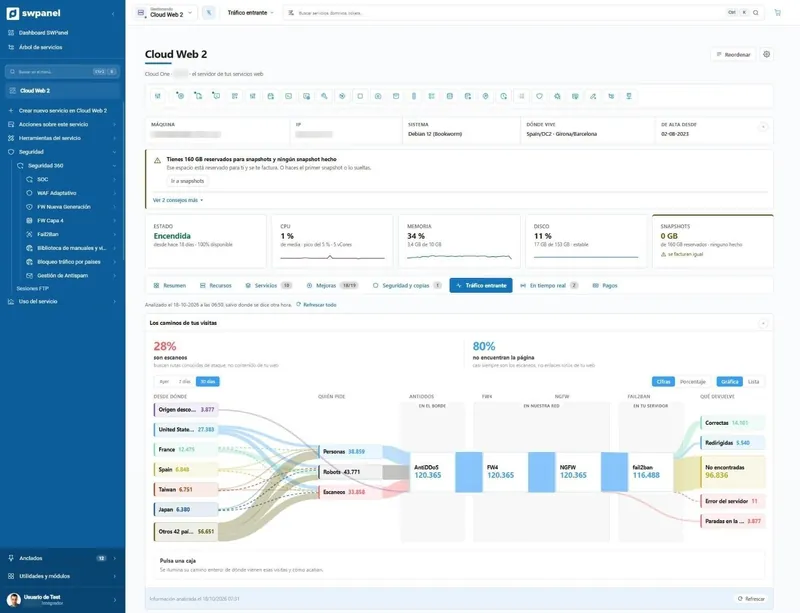
Last week, server attacks decreased by 23% compared to the previous one. This is a relief, but it doesn't mean the danger has disappeared. Attackers are still trying to access WordPress, SSH, email, and other services, and although the SWPanel firewall blocks them, it's important to understand why this happens and how to protect yourself.

Perimeter attacks 1 Nov 2026
Info

AI bots keep rising: what does it mean for your website?

AI bots continue to increase their presence on websites with BotLock active. This week, they represent almost 30% of total traffic, which is 55% more than the average of the previous five weeks. This doesn't mean your website is in danger, but it does mean there is more automated activity trying to gather information, test vulnerabilities, or even copy content. Although most of these bots are not malicious, some can cause problems if not controlled. That's why we explain what's happening, why it's happening, and what you can do to protect yourself.

BotLock 28 Oct 2026

Info

Vulnerabilities in WordPress: What does it mean for your website?

Imagine your website is like a house with doors and windows. If one of them has a security flaw, someone could enter without permission. This week, 93 such "doors" have been found in WordPress plugins and themes. Some allow an attacker to do things like take control of accounts, upload dangerous files, or even execute commands as if they were the owner. It's not a problem with your website specifically, but it's something you should know if you use WordPress.

WordPress 27 Oct 2026

Info

Vulnerabilities in the digital world: what you need to know this week

In the digital world, just like in real life, there are doors left open due to carelessness. This week, experts have detected 81 new vulnerabilities in software and platforms used by millions of websites. One of them, specifically, is already being used in ransomware attacks, meaning attacks that lock your website or your data until you pay a ransom. It's not a joke: this is what's happening in the real world, and it's what SWPanel monitors for you.

Exploited CVEs 26 Oct 2026

Info

Less web traffic and more data from Spain: what does it mean for your website?

This weekend, traffic to websites hosted on SWPanel has slightly decreased, but the amount of data transferred has increased. This means that although fewer people visited the websites, those who did interacted more: they downloaded more images, videos, or documents. It's as if instead of having more visitors, each one spent more time on the website or performed more actions.

Platform pulse 25 Oct 2026

Info

Rising attacks: how to protect your website in a more vulnerable world

In a world where websites are like open doors to the network, new ways to attack them are published every day. This week, for example, 37 new or updated attack methods have been identified, which is a significant jump compared to previous weeks. But don't worry: we'll explain what this means, how it affects your website, and what you can do to protect yourself.

Attack vectors 25 Oct 2026

Info

More attacks blocked this week: what does it mean for your website?

This week we've seen an increase in unauthorized access attempts to servers, websites, and emails. Although the attacks have been blocked by our security system, it's important to understand what's happening and how you can protect your website or online store. In this newsletter, we explain it clearly, without alarmism or technical jargon, and we give you the tools to be prepared.

Perimeter attacks 25 Oct 2026

Info

How has security been in SWPanel in the last 30 days?

In the last 30 days, the SWPanel SOC has been paying close attention to security alerts and news affecting hosting services and websites hosted on our servers. In total, we have published 5 security alerts and 4 contextual news items. Of the alerts, 3 were high risk and 1 was critical. Additionally, 66% of the affected services have already been fixed, while 29% still have no possible solution. These figures help us understand what's happening in the world of security and how we can protect you better.

SOC summary 25 Oct 2026

Info

Control bots and attacks: a practical guide to protect your website

Today, your website not only needs to work well, but also to be secure. And one of the most common threats is not a hacker with a keyboard, but a bot: an automated program that can try to get in, steal data, or even bring down your site. Why should you care now? Because we already know that 23.2% of the traffic on websites with BotLock are AI bots and 9.9% are bots trying to steal information. It's not a distant problem: it's real, and it can affect you. But don't worry: with a few simple steps, you can protect your website as if you had a security guard who only lets the good guests in.

Practical guides 25 Oct 2026

Info

Bots on your website: what they attack, what we block, and how to protect yourself

Last week, in SWPanel, we observed notable bot activity, especially from artificial intelligence. Although most of the traffic on websites comes from real people, bots also play an important role, and not always as friends. In this bulletin, we explain what we saw, what it means, and how you can protect yourself without technical complications.

BotLock 25 Oct 2026

Info

Critical flaws in WordPress plugins and themes: what you need to know

Imagine you have a physical store and suddenly discover that the main door lock has a flaw: anyone who knows about it can enter without a key. That's more or less what's happening with some WordPress plugins. This week, 90 critical vulnerabilities have been identified in WordPress plugins and themes, and that means if your website uses any of these tools without updating, it could be exposed to attacks. It's not an exaggeration: it's a reality affecting thousands of websites worldwide. But don't worry, we'll explain what to do.

WordPress 25 Oct 2026

Info

Vulnerabilities in the world: what to watch in October 2026

In the world of cybersecurity, every week brings new alerts. This week, 83 new vulnerabilities have been identified that could be exploited by attackers. One of them is already being used in ransomware campaigns, a type of attack that can paralyze your website or online store. Why should you care? Because if your website uses an outdated plugin or CMS, it could be an easy target. This isn't alarmism—it's about being prepared before something happens.

Exploited CVEs 25 Oct 2026

High

Server system vulnerability (Debian BIND)

We have detected a vulnerability in a component of the operating system on Cloud servers. This component, called BIND, is responsible for managing internet addresses (like the ones you use to access your website). The vulnerability affects older versions of this system. If your server is using an affected version, it's important to update the system to protect it. If the server is managed by us, we are already updating it. If you manage it yourself, follow the instructions below.

Servers and system (Debian) 23 Oct 2026 4 CVE

High

Security updates for Node.js (21-10-2026)

Node.js has published a series of security updates on October 21, 2026. These updates address 4 critical vulnerabilities affecting previous versions of the 22, 24, and 26 branches. This information is relevant if you have installed Node.js on your server (Cloud or dedicated) and use it to run applications. SWPanel does not manage or automatically update Node.js, so if you use it, you will need to take action yourself.

Node.js 23 Oct 2026 4 CVE

High

Vulnerability in Debian's Apache: recommended update

We have detected 15 vulnerabilities in the Apache server on Debian. Although they are not being actively exploited, it is recommended to update to stay protected. If your website is on a server managed by us, we are already working to apply the patch. If you manage the server yourself, follow the instructions below.

Servers and system (Debian) 23 Oct 2026 15 CVE

High

Vulnerability in Moodle: update to version 4.5.9

We have detected a vulnerability in Moodle, a widely used platform for creating online academies and courses. This vulnerability affects versions prior to 4.5.9. If you use Moodle and haven't updated yet, we recommend you do so as soon as possible to protect your website. If the website was installed from SWPanel and you have automatic updates enabled, SWPanel can help you update it. Before doing so, make a backup in case something goes wrong.

CMS 23 Oct 2026 3 CVE

Critical

Critical vulnerabilities in PHP resolved

If you're using our managed services, you're already protected. Our team has acted quickly to fix a serious security issue in PHP, a language essential for many websites to function. We'll explain what happened, why it's important, and what you should do if you're using an older version of PHP.

PHP 21 Oct 2026 2 CVE

High

Vulnerability in PHP: update your version to stay safe

We have detected a vulnerability in PHP, a language used by many websites to function. This vulnerability has been fixed in newer versions. If you are using an affected version, we explain how to check and what to do. If your server is managed by us, we are already applying the patch.

PHP 24 Sep 2026 1 CVE

There are no alerts with these filters.

  • Advisories: software SWPanel manages on its servers.
  • Informational: software it doesn't manage, like Node.js.
  • Context: SOC summaries and guides, with no specific vulnerability.
  • Follow the bulletin via RSS

Subscription

The alerts, in your inbox

Every time SWPanel's SOC publishes an alert, it reaches you by email with the same article: what happened, who it affects and what to do.

  • Only security alerts, when something matters
  • You choose the severity and the topics you care about
  • In seven languages
  • Unsubscribe from any email
Which alerts you want
About what

If you're a customer

In SWPanel, the Bulletin knows which services you have

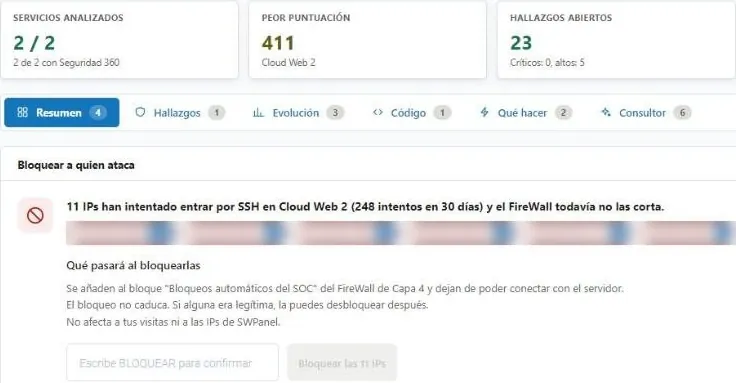
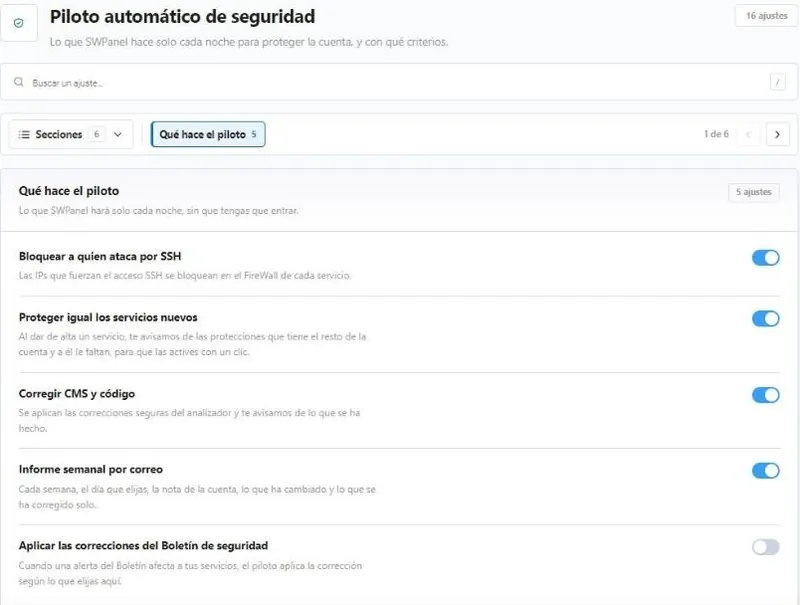
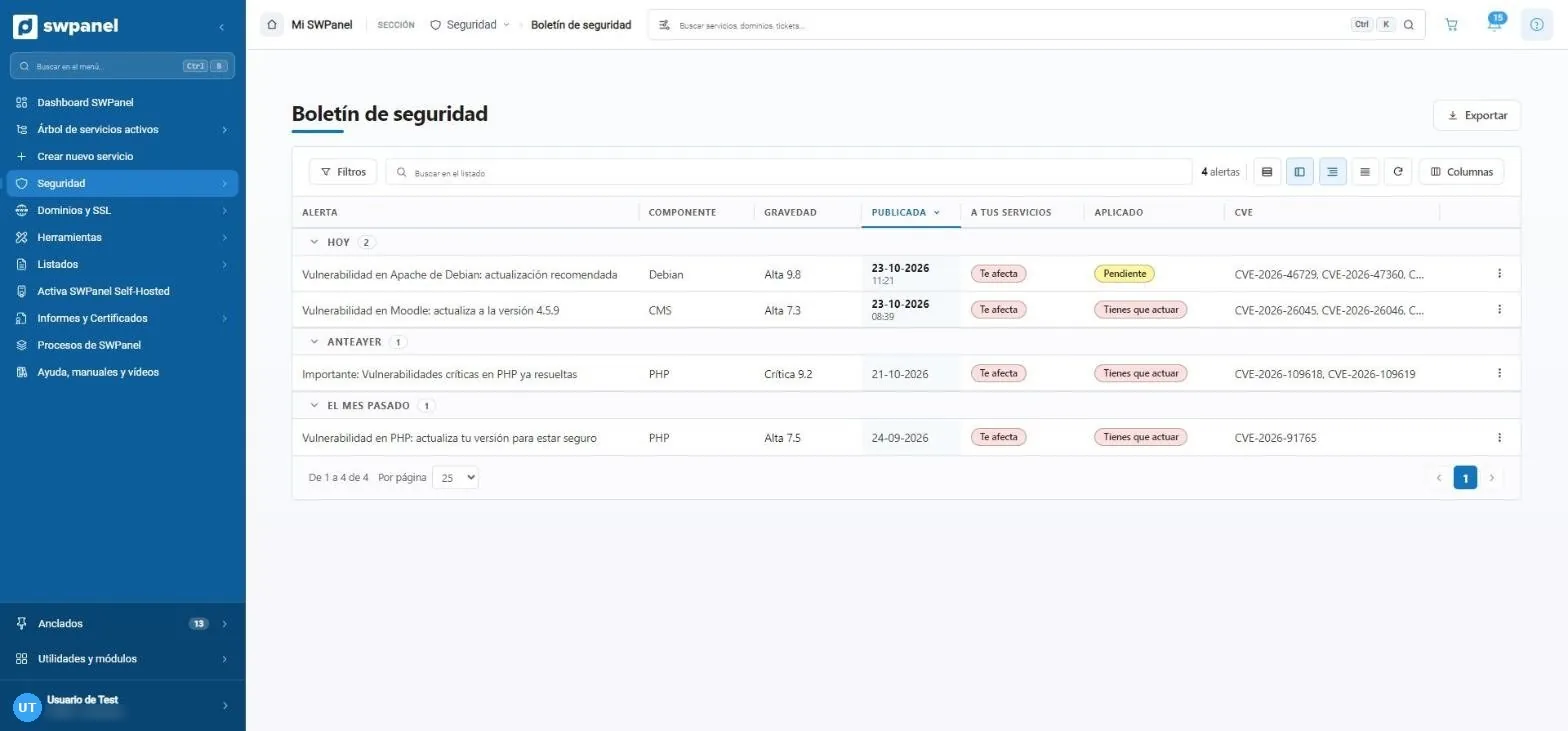
The same alerts, cross-checked with your services: which affect you, what SWPanel does on each one and what you have to do. With the autopilot, the fix can be applied on its own.

dev.swpanel.com › Security › Security bulletin Real screenshot
The Security Bulletin inside SWPanel: each alert with its severity, whether it affects your services and whether it's already applied

Frequently asked questions

Questions about the bulletin

The alerts the SWPanel SOC publishes whenever a vulnerability that matters comes out: in PHP, in the web server, in CMSs such as WordPress or Moodle, in the servers' operating system or in tools such as Node.js. Each alert explains what happened, who it affects and what to do.

That is the idea. Every alert starts with «What happened, explained simply» and «Why it matters», and ends with the steps, the frequently asked questions and the references, in case you want to go to the source.

The severity tells you how much damage the vulnerability can do if someone exploits it. CVSS is the standard score, from 0 to 10. Some sources only give the severity, without a score: in that case the alert has no CVSS.

The one about software that SWPanel does not manage or update, such as Node.js on a Cloud or a server. We tell you about the vulnerability and what to do, but the update is up to you.

Yes. The articles explain the vulnerability and how to fix it on any server. The parts that mention SWPanel say what we do with the services we manage.

Inside SWPanel, the Bulletin knows which services you have: it marks the alerts that affect you, tells you what to do on each service and, with the autopilot, can apply the fix for you.

No. The public bulletin never says which services or how many are affected. Only each customer sees that, in their own SWPanel.

From the link at the bottom of every email, with one click.